

Pastured Turkey

Shipping NOW!
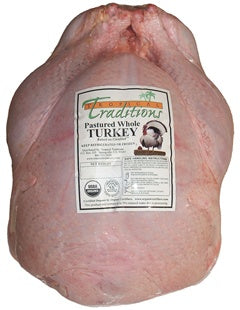
Whole Pastured Turkeys
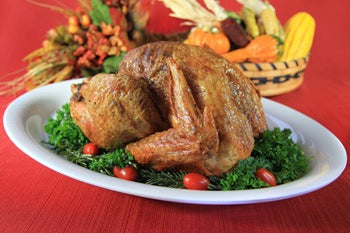 Herb Roasted Pastured Turkey
Recipe Here
What makes Grass-fed Traditions Pastured Turkeys different from "organic" or "free range" turkeys?
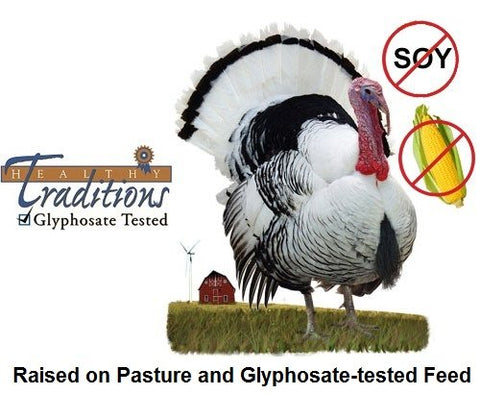
1. Grass-fed Traditions Pastured Turkeys are raised outdoors on pasture.
Commercially produced turkeys are typically raised entirely indoors with thousands of other turkeys in close quarters. They typically never see the sun or pasture.
Organic or "Free Range" turkeys also have no standard definition or industry guidelines for how long they must be outdoors on pasture, leaving the consumer very confused.
The USDA definition of "free-range" is rather vague. In order to label their meat and poultry "free-range or free-roaming," "Producers must demonstrate to the Agency that the poultry has been allowed access to the outside."(1) No mention of vegetation (pasture) is made.
Poultry producers themselves seem to have no common standards on what the term means. Some producers interpret "access to the outside" as a small door on an end-wall of a 100 ft. long shed filled with un-caged birds moving about freely on a litter-covered floor. Others feel they are compliant with the spirit of free-range if their birds are outside in the open air and under the sun; even if their "range" is simply bare dirt.
When it comes to the consumer's perception of "free-range," arguably the vision that "free-range" most often conjures is of a bird happily hunting and pecking in the grass in an open field. Because of the wholesomeness associated with the term "organic," many consumers take for granted that all certified organic poultry raised for meat and eggs are raised outside on green pasture.
Sadly, this is not so. The term "free-range" is not even listed in the NOP (National Organic Program) "terms defined."(2) They do give guidelines that say: "All organically raised animals must have access to the outdoors..."(3)
So when someone purchases poultry products labeled "free range" or "organic," the birds may never have actually seen the light of day or green grass its entire life. Technically, they simply have to have a door out of their confinement, but they don't have to necessarily walk through that door to meet the requirements.
2. Grass-fed Traditions pastured poultry are fed Glyphosate-Tested Feed which contains no soy or corn - no GMO ingredients at all.
We developed our own turkey-feed ration that contains NO soy or corn. In more recent history, with the development of fast-growing factory turkeys, soy has become a key ingredient in poultry feeds for the purpose of supplying a high concentration of protein to promote fast growth.
It is very difficult to find a turkey in the US market today that has not been fed high soy-based feeds. Even turkeys advertised as "organic" or "free range" are almost always fed an organic mixture high in soybeans, and they are seldom pastured on green grass.
A study done at Ohio State University showed that chickens fed soy resulted in soy protein showing up in the tissues of the chickens, and in the yolks of the eggs. Study here.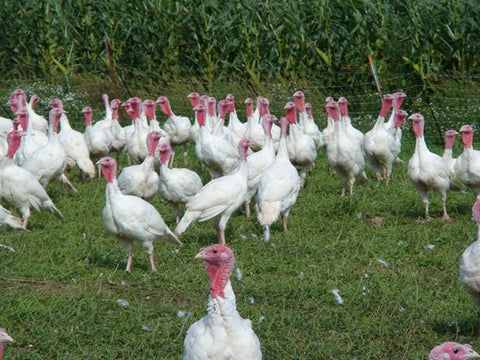
Our pastured turkeys are raised outdoors in summer on green pastures in Wisconsin that are not treated with any chemical fertilizers or herbicides. We never use vaccines, including mRNA vaccines, with our animals.
3. Grass-fed Traditions pastured poultry are raised by family farmers.
Grass-fed Traditions Pastured Poultry turkeys are all raised by family farmers. These farmers run diversified farms practicing traditional agriculture. They will rotate tracts of land with crops and other animals, or let it go fallow from time to time. When a batch of turkeys is raised on a piece of pasture, typically that pasture will not see poultry again for two or more years.
In the interval, crops may be grown in that pasture, or it may go fallow allowing grass to grow, die, and decompose so that the soil is kept in balance and not contaminated from too much chicken manure. So when you buy Grass-fed Traditions pastured poultry, you are supporting small-scale family farmers and by-passing the system that produces the conventional "factory bird."
About our Pastured Turkeys
We have various farmers throughout Wisconsin raise these turkeys during the short Wisconsin summers, when they can roam around outside on fresh green pasture.
We have limited supplies, and they are offered on a first-come first-serve basis. While the turkeys are all raised on family farms, they are processed at a USDA certified processing plant that is also organic certified.
Note: "Free Range" is defined by the USDA as "having access to outdoors" and means the warehouse containing the turkeys must have a door where the birds can go outdoors, if they wish. It makes no specification that the birds MUST be outdoors, or that they are on grass while outdoors. "Pastured" means green pasture, moving the turkeys to fresh pasture regularly.
How do Grass-fed Traditions Pastured Turkeys
compare to other online "free range" turkeys?
| Online Turkey A |
Online Turkey B |
Online Turkey C |
Online Turkey D |
Grass- fed Tradi- tions |
|
| Glyphosate-tested Feed | No | No | No | No | Yes |
| GMO Free | Yes | Yes | Yes | Yes | Yes |
| Green Pasture | Yes | Yes | Yes | Yes | Yes |
| Soy Free Feed | No | Yes | No | No | Yes |
| Corn Free Feed | No | Yes | No | No | Yes |
| Size | 16 lbs. |
16 lbs. |
16 lbs. |
16 lbs. |
16 lbs. |
| Price | $186.24 | $243.88 | $181.95 | $189.99 | $131.99 |
Prices as of October 20, 2023.
Below is a ground transit time map using our zip code in Wisconsin:
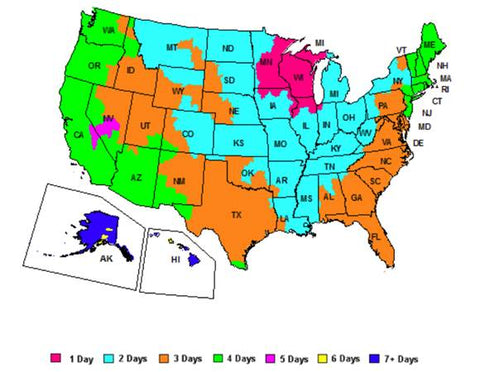
Orders are shipped frozen, Monday through Wednesday, each week from Wisconsin with dry ice in an insulated box.*
(US only)
Allow 2-3 days for thawing.
References
(1) From the USDA site on meat and poultry labeling:
http://www.fsis.usda.gov/wps/portal/fsis/topics/food-safety-education/get-answers/food-safety-fact-sheets/food-labeling/meat-and-poultry-labeling-terms/meat-and-poultry-labeling-terms
(2) NOP terms defined:
http://www.ams.usda.gov/AMSv1.0/getfile?dDocName=STELDEV3004445&acct=nopgeninfo
(3) From the USDA website on the National Organic Program:
http://www.ams.usda.gov/nop/FactSheets/ProdHandE.html
*Note: Cold storage and frozen items like Pastured Poultry are shipped from a separate location (Wisconsin) and have separate shipping charges from non-cold storage items. They are shipped in coolers with dry ice (the ice is used up by the time it reaches you most of the time.) Shipping charges depend on weight and zip code, and will be chosen at check out. If you are in a hot location such as the southwestern desert area of the US, you should choose 2nd day air or overnight to be sure your order arrives frozen. Orders are shipped Mondays through Wednesday each week. Due to the nature of the products, perishable food items such as meat, poultry and dairy are not eligible for refund or return. If the shipment is damaged we will replace it.

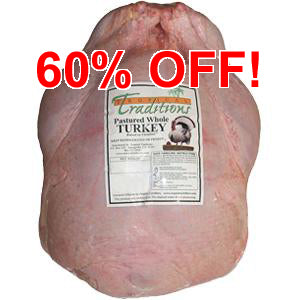
Whole Pastured Turkey - 12-13 lb.

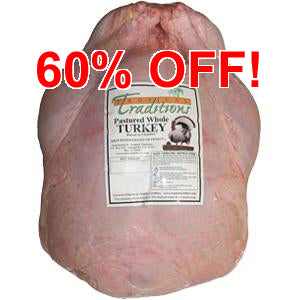
Whole Pastured Turkey - 13-14 lb.

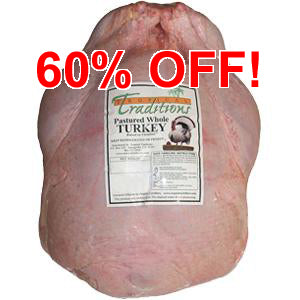
Whole Pastured Turkey - 14-15 lb.

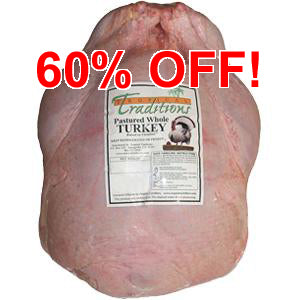
Whole Pastured Turkey - 16-17 lbs.

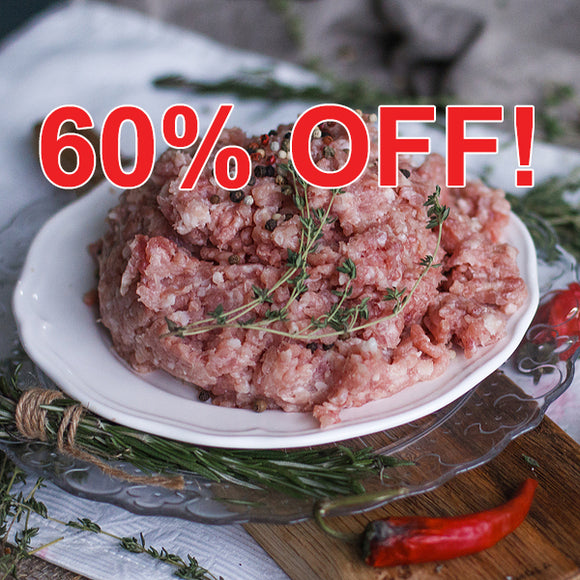
Soy-free Turkey Breakfast Sausage - approx. 1 lb. per pkg. (Minimum of 5)

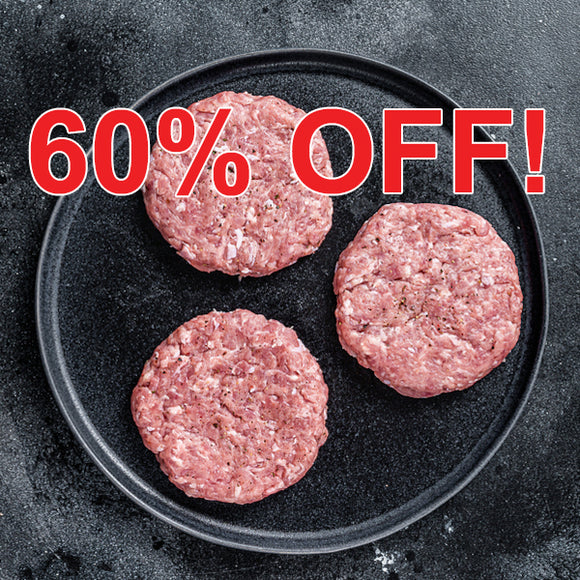
Soy-free Turkey Breakfast Sausage Patties – 6 Patties per Package - approx. 1 lb. per pkg. (Minimum of 5)

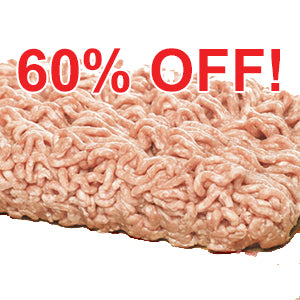
Soy-free Ground Turkey - approx. 1 lb. per pkg. (minimum 5 packages)

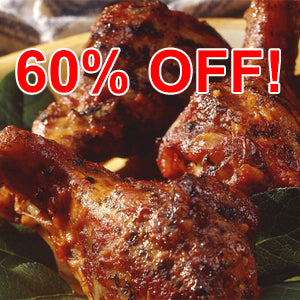
Turkey Drumsticks (2 per pkg) - 1 pkg / 2.7 – 3 lbs. (minimum 4 pkgs)

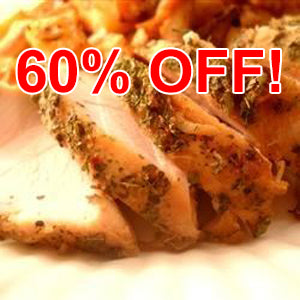
Turkey Boneless Breast (2 per pkg) - 1 pkg / 3.2–4.3 lbs. (minimum 2 pkgs)

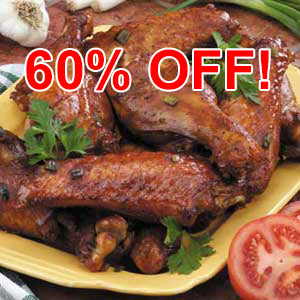
Turkey Wings (2 per pkg) - 1 pkg approx. 3.8 lbs. (minimum of 2 pkgs)

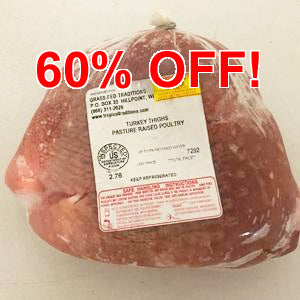
Turkey Thighs - 2 Per Package - avg 3.2 lbs. (minimum of 3 packages)

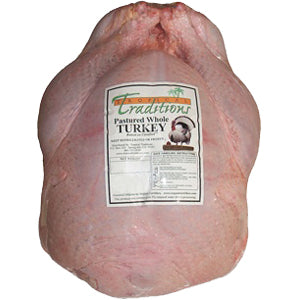
Whole Pastured Turkey - 15-16 lb.

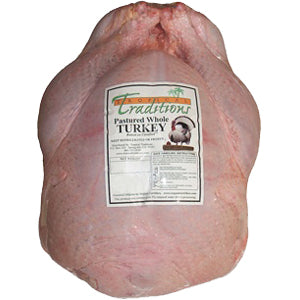
Whole Pastured Turkey - 17-18 lb.

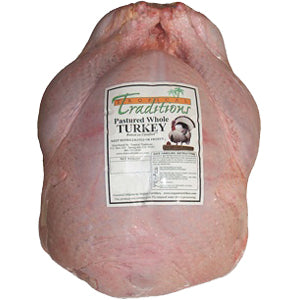
Whole Pastured Turkey - 19-20 lb.

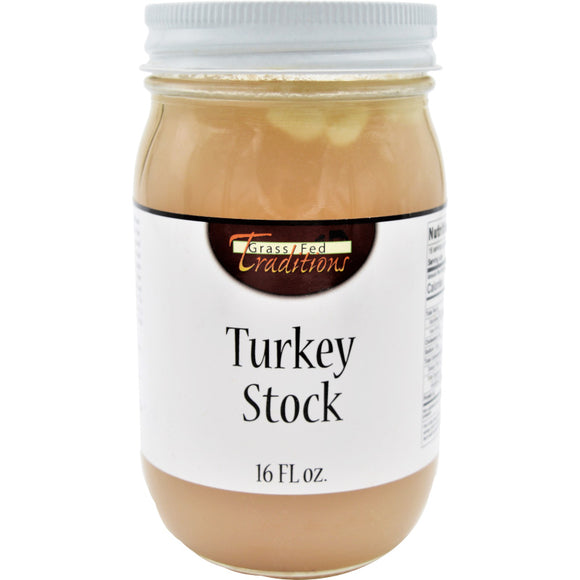
Pastured Turkey Bone Stock 16 oz. (2-jar minimum)

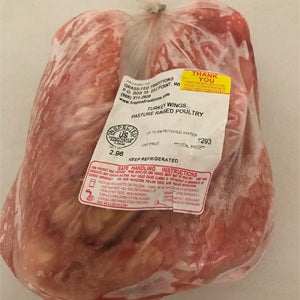
Turkey Wings (2 per pkg) - 1 pkg / 2.9 – 3.25 lbs. (minimum of 4 pkgs)

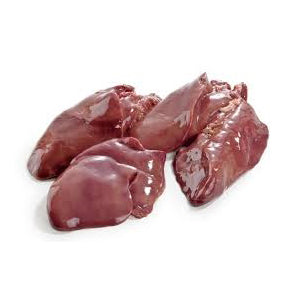
Turkey Liver - 1 pkg. - approx. 2 lbs. (Minimum of 3 pkgs.)